The Small Business Owner's Guide to AI: Where to Start Without Getting Overwhelmed
AI doesn't have to be complicated or expensive. This is the practical, no-hype guide we wish someone had given us when we started.
If you've been meaning to "figure out AI" for your business but haven't known where to start, this is for you. Not the version full of buzzwords and vendor promises — the practical version, written for people who run real businesses and don't have time to become AI experts.
First: Drop the Expectation That You Need to Understand It Fully
You don't understand exactly how your accounting software calculates depreciation. You don't know how your point-of-sale system processes a card transaction. You don't need to — you just need to know what it does and whether it solves a problem you have.
AI is the same. You don't need to understand large language models. You need to know: what problem do I have, and can AI help with it?
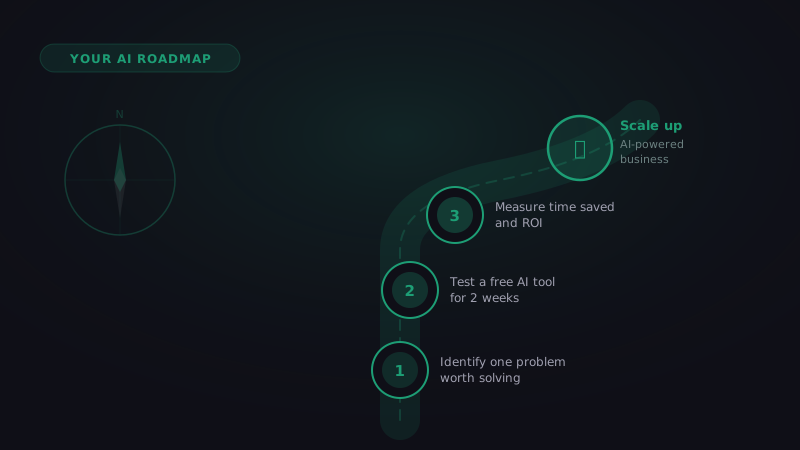
Step 1: Find Your Biggest Time Drain
Before touching any tool, spend 10 minutes thinking about where your time actually goes. Common answers from Vancouver SMB owners we've worked with:
- Answering the same customer questions over and over
- Writing emails, proposals, or social content
- Chasing invoices or managing bookkeeping data
- Scheduling, rescheduling, and confirming appointments
- Manually entering data between systems
Pick the single most painful one. That's where you start.
Step 2: Test a Free Tool for Two Weeks
Don't buy anything yet. Most AI tools have free tiers that are genuinely useful. For writing and thinking tasks, Claude and ChatGPT are both free to start. For automation, Zapier has a free plan. For customer-facing chatbots, many platforms offer trials.
Use it every day for two weeks on your chosen problem. Give it real context about your business. The more specific you are, the more useful it becomes.
Step 3: Measure What Actually Changed
After two weeks, ask yourself a simple question: did I save time? How much? If you saved 3 hours a week and your time is worth $75/hour, that's over $11,000 a year in recovered capacity. That's a meaningful result.
If you didn't save time, the tool wasn't right for the problem — not a reason to give up on AI, just a reason to try a different angle.
Step 4: Build Outward
Once you have one thing working, add another. AI adoption in small businesses works best as a series of small wins, not a big-bang transformation. Each win gives your team confidence, generates proof that it works, and shows you where to go next.
What to Ignore
Ignore anyone selling you on AI as a magic solution that will run your business for you. Ignore the hype about replacing all your staff overnight. Ignore overly complex systems that require months of setup before you see any value.
Good AI implementation should show results within weeks, not quarters. If it doesn't, something is wrong with the approach — not with AI itself.
You Don't Have to Figure This Out Alone
We work with Vancouver business owners who are exactly where you are — curious about AI, not sure where to start, and wary of wasting money on tools that don't deliver. Our free discovery call is 30 minutes, no obligation, and designed to give you a clear next step regardless of whether you work with us after.
Ready to put AI to work for your business?
Book a free consultation with AdaptAI and get a clear, no-jargon roadmap for AI in your business.
Book a Free Consultation