Is Your Business Data Safe With AI Tools? A Plain-English Guide
Data privacy is the number one concern we hear from Vancouver business owners considering AI. This post cuts through the confusion — what AI tools actually do with your data, and how to protect yourself.
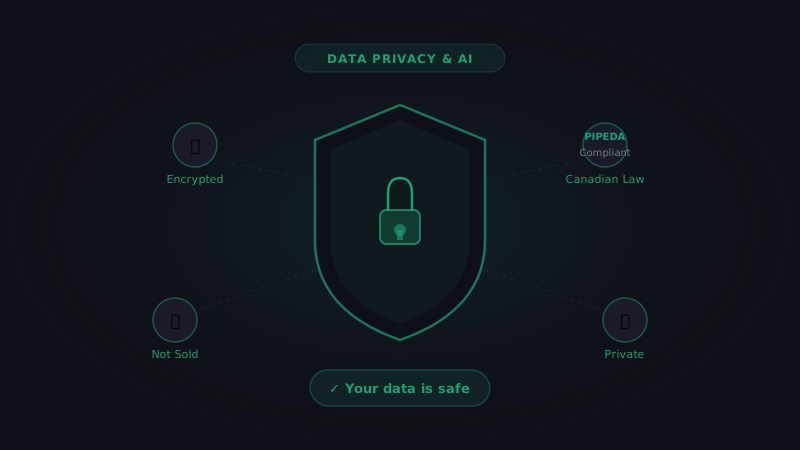
Data privacy is the question we get most often from Vancouver business owners who are curious about AI but hesitant to commit. "If I paste my customer data into ChatGPT, does it use that to train its models? Who can see it? What does Canadian law say about this?" These are the right questions to ask — and they have real answers.
The Core Concern: What Happens to Your Data?
When you interact with an AI tool, your input goes somewhere — typically to a server, through the AI model, and back to you. The key question is what happens to it between those points:
- Is it stored? For how long?
- Is it used to train future AI models?
- Who at the company can access it?
- Where are the servers? (Relevant for Canadian privacy law)
The answers vary significantly between tools and between their free vs. paid plans.
The Difference Between Consumer and Business Plans
This is probably the most important thing to understand: most AI tools have two modes of operation, and the rules are different.
Free/consumer plans (ChatGPT free, Claude.ai free): Your conversations may be used to improve the AI model. Humans may review conversations for safety and quality purposes. Don't put sensitive business or customer data here.
Business/API plans (ChatGPT Team, Claude for Business, Enterprise): Your data is typically not used for training. Stronger privacy protections apply. Contractual commitments exist. This is the version appropriate for business use with real data.
If you're running a business and using a free AI tool with customer information, that's a meaningful risk. The solution isn't to avoid AI — it's to use the right tier of product.
Canadian Privacy Law: What You Need to Know
Canada's privacy landscape for businesses includes PIPEDA (the federal law) and BC's PIPA at the provincial level. The practical implications:
- You need consent or a legitimate purpose to collect and process customer personal information
- If you're sending customer data to a third-party AI tool, that tool becomes a service provider processing data on your behalf
- You remain responsible for how that data is handled, even if a third party processes it
- If customer data is stored outside Canada, you should be aware of this and consider whether your privacy policy reflects it
For most Vancouver SMBs using reputable AI tools on business plans, compliance is achievable — but it requires using the right tools and having basic policies in place.
Practical Rules for Safe AI Use
- Never put customer personal information into free AI tools. Names, emails, phone numbers, purchase history — keep these out of free tiers.
- Use business plans for business data. The cost difference is often modest, and the privacy protections are meaningfully stronger.
- Anonymise where possible. If you're asking AI to analyse customer patterns, you often don't need to include names or contact details. Remove identifying information before you paste.
- Read the data processing agreement. Reputable vendors publish these clearly. If you can't find it, that's a signal.
- Keep your team trained. One employee pasting a client list into a free AI tool creates exposure for the whole business. Set clear policies.
The Bottom Line
AI and data privacy aren't in conflict — but they require thought. The businesses that handle this well treat AI tools like any other software vendor: they choose reputable ones, use appropriate plans, and have basic policies in place. The businesses that get into trouble are the ones using free consumer tools with real customer data, or adding AI without any consideration of how data flows.
If you're not sure whether your current AI setup is appropriate for the data you're working with, that's a great topic for a free consultation. We'll walk through your tools, your data types, and any gaps — without the legal jargon.
Ready to put AI to work for your business?
Book a free consultation with AdaptAI and get a clear, no-jargon roadmap for AI in your business.
Book a Free Consultation